TL;DR
A prediction-market prop firm sells a paid evaluation, not a brokerage account. Clear a profit target inside published loss, drawdown and consistency rules and the firm grants a funded simulated account on Polymarket and Kalshi, then pays you a share of what it makes.
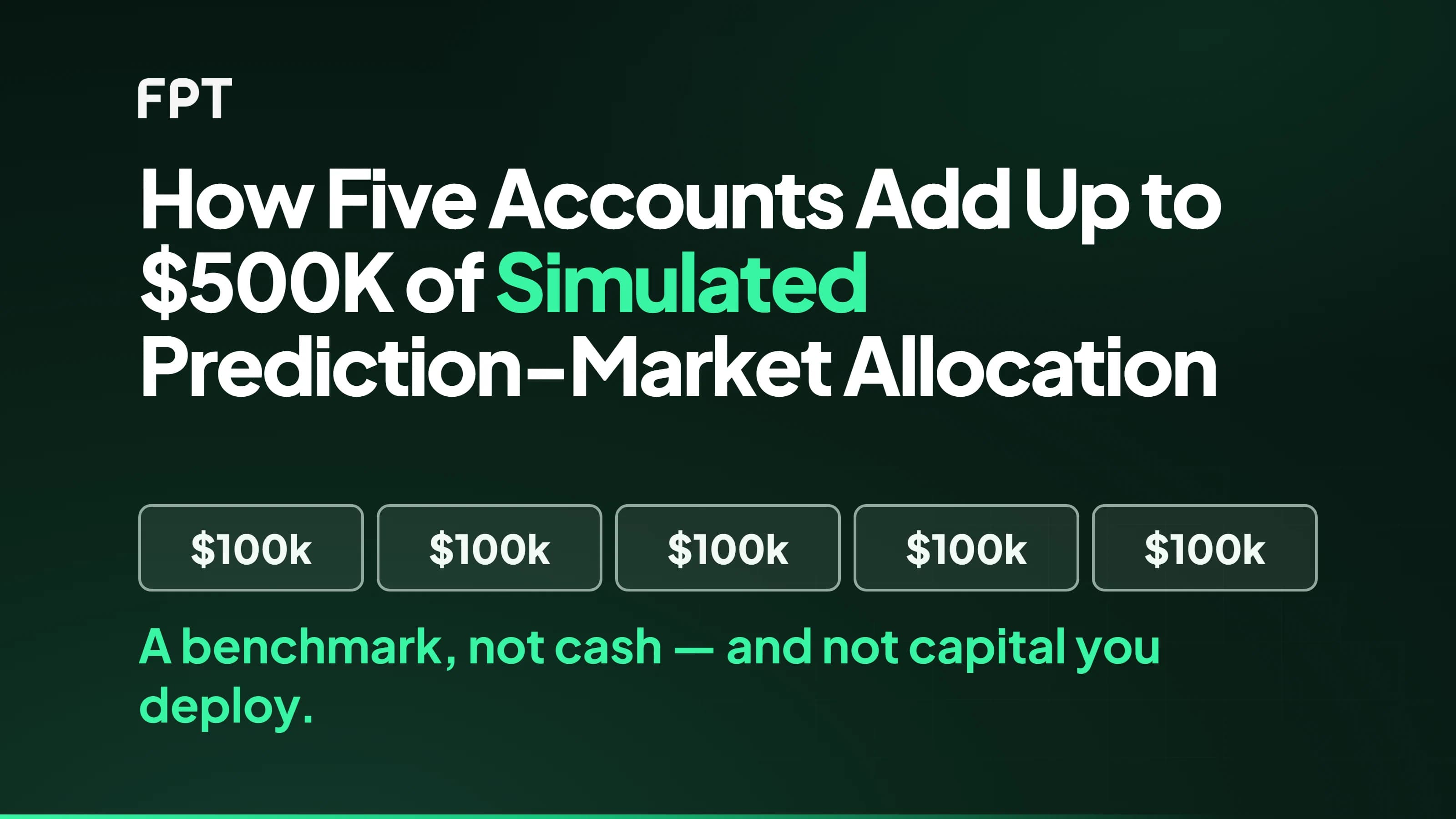
- Account size is a yardstick, not money. Target, max loss and drawdown are measured against it.
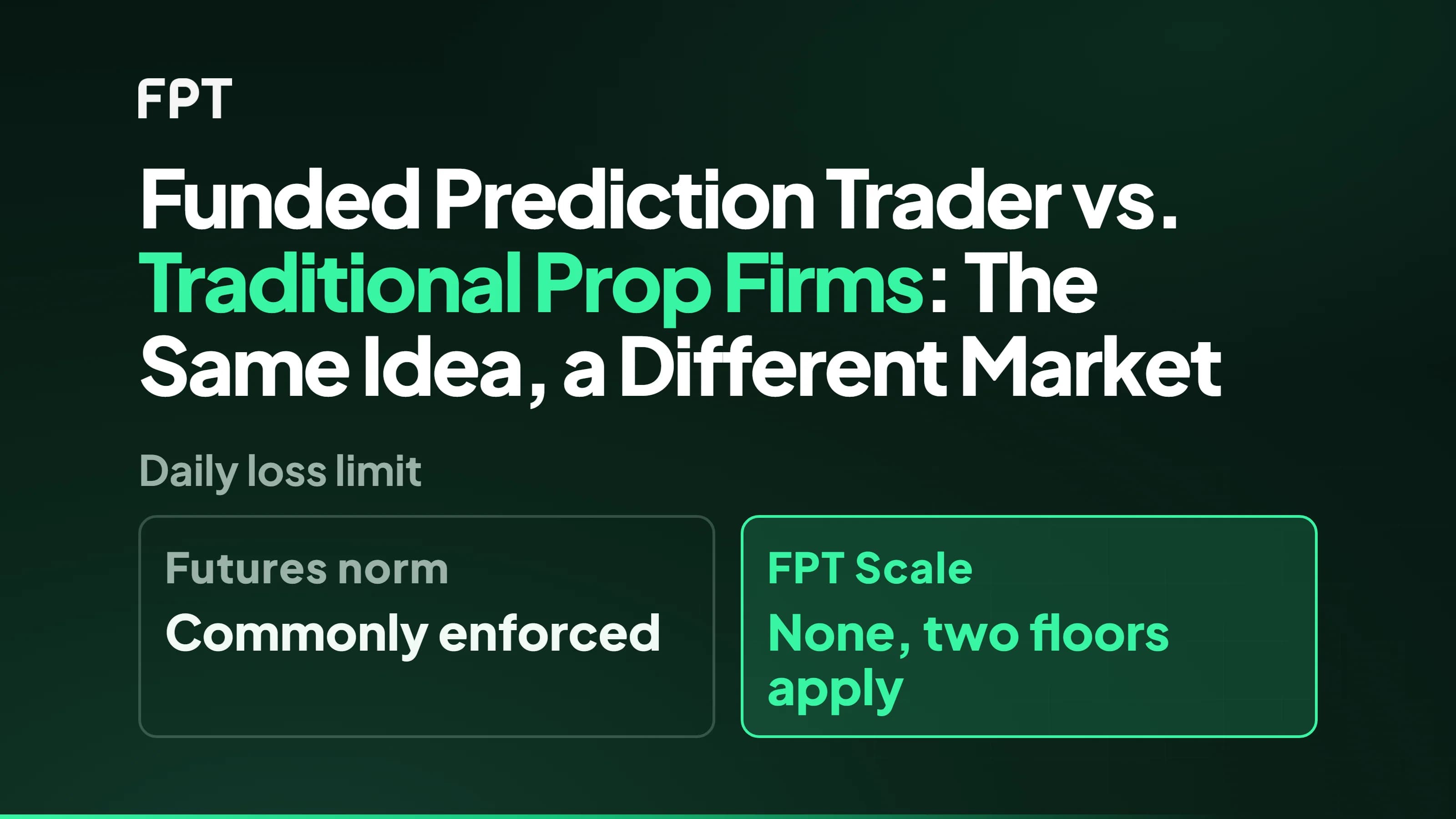
- The $50k evaluation: $3,000 target, $2,000 max loss, no daily loss limit, EOD trailing drawdown.
- Open size is capped in dollars across the whole account, and each market again at a slice of its daily volume.
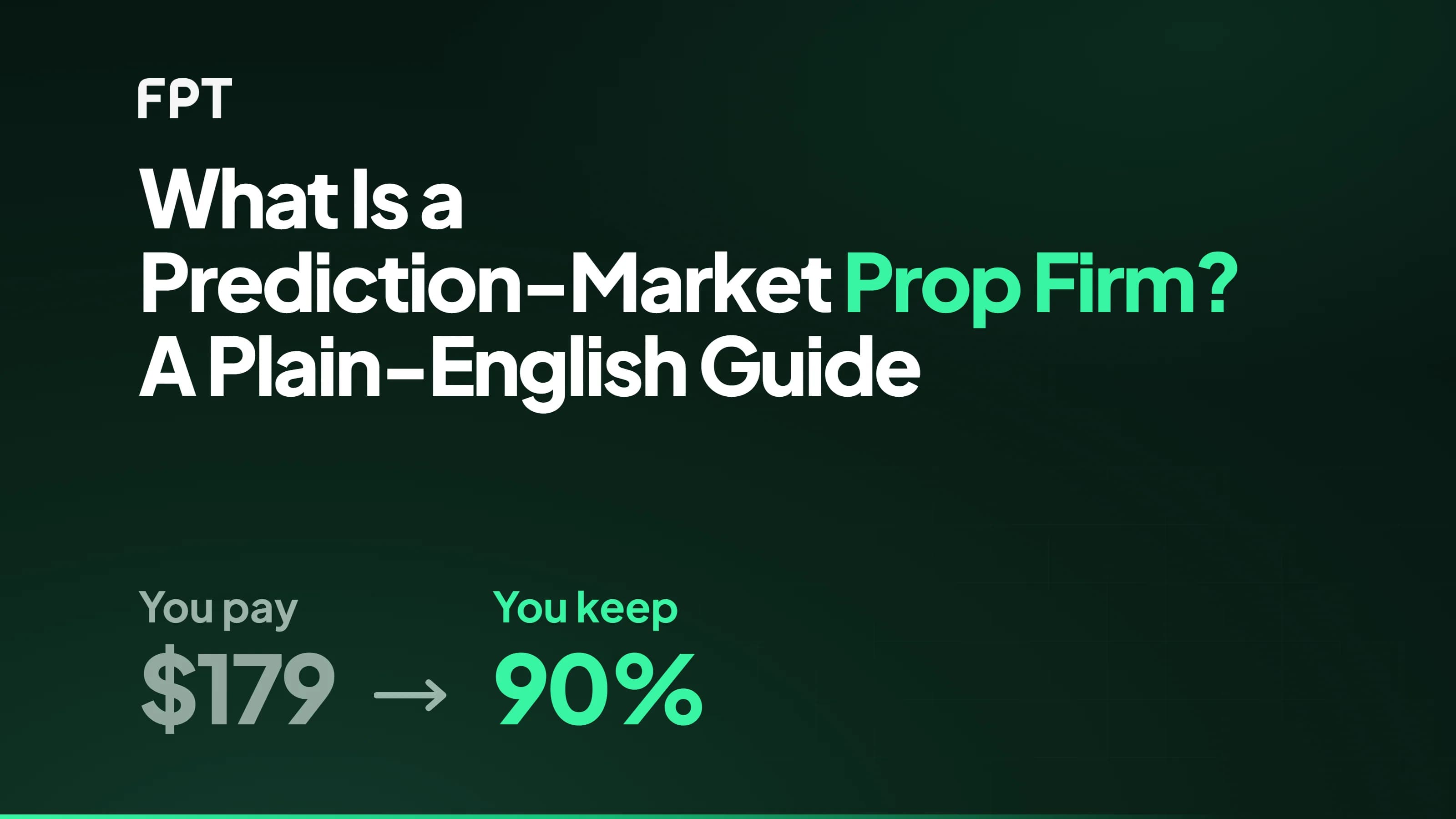
- Payouts: 90% of the profit is yours, sent within 48 hours of approval.
Nobody takes your deposit. Nobody routes your orders. No statement turns up with your name on something you own.
A prediction-market prop firm sells an audition. Pay a fee, trade a published rule set, hit the profit target without breaking a rule, and you get a funded simulated account that pays you most of what it makes.
The rules are not fine print around a product. The rules are the product. Here they are, in the order they will matter to you.
Where the Model Came From
None of this structure is new. Futures and FX programs have sold it for years: pay for an evaluation, trade a balance against a target and a loss limit, split the profit if you pass. A large one calls that balance Initial Simulated Capital.
Funded Prediction Trader (FPT) runs that model on prediction markets, and its FPT Scale evaluation is where the product numbers on this page come from. Treat it as one worked instance of the category, not the category itself.
Swap the instrument and you have this. Instead of index futures you trade event contracts that settle at $1 if the thing happens and $0 if it does not. The price in between is the crowd's odds.
A Price Is a Probability
Coming from a funded futures seat, risk discipline transfers. Sizing intuition does not. What carries over audits the rest.
What the Fee Buys
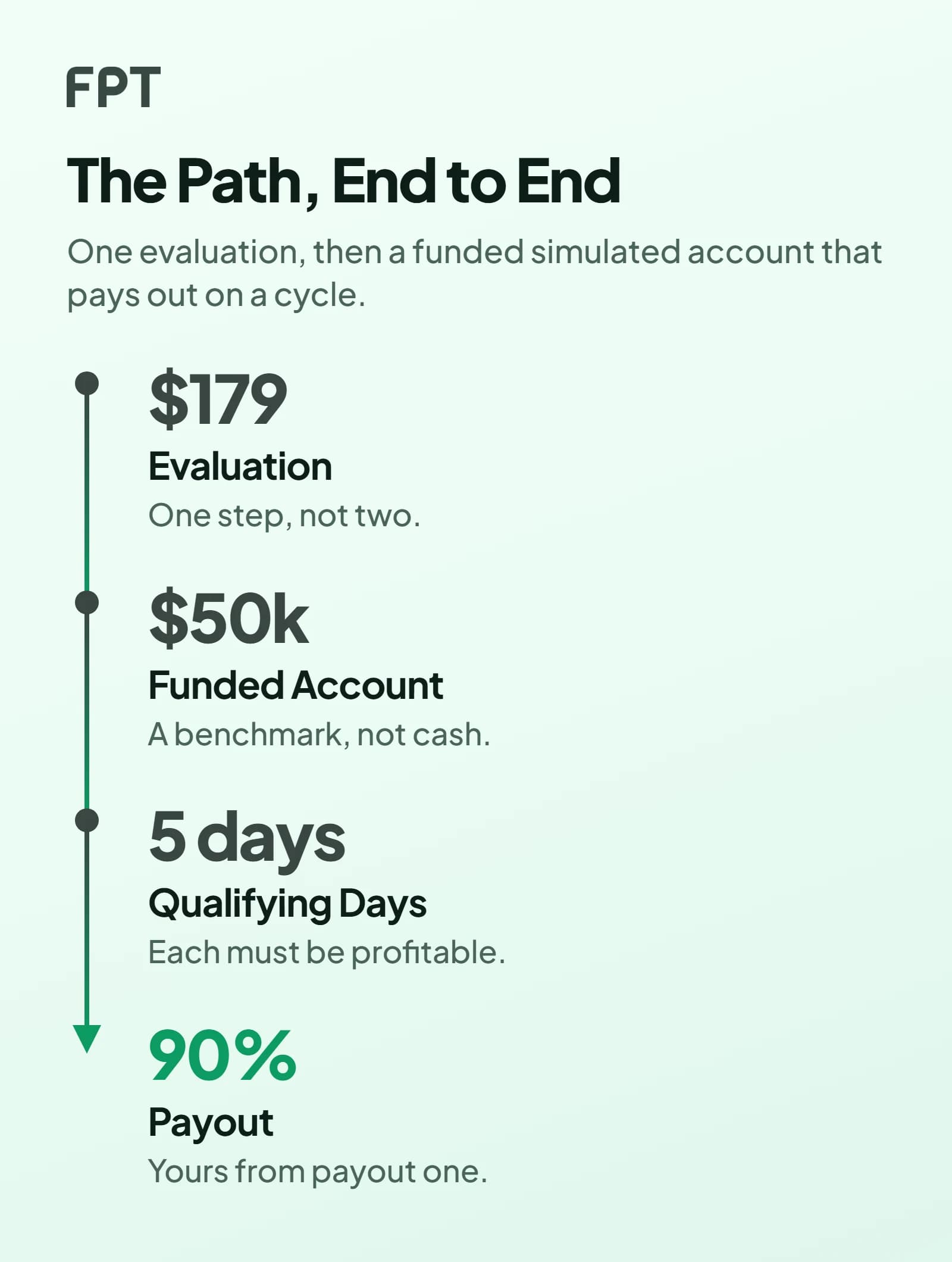
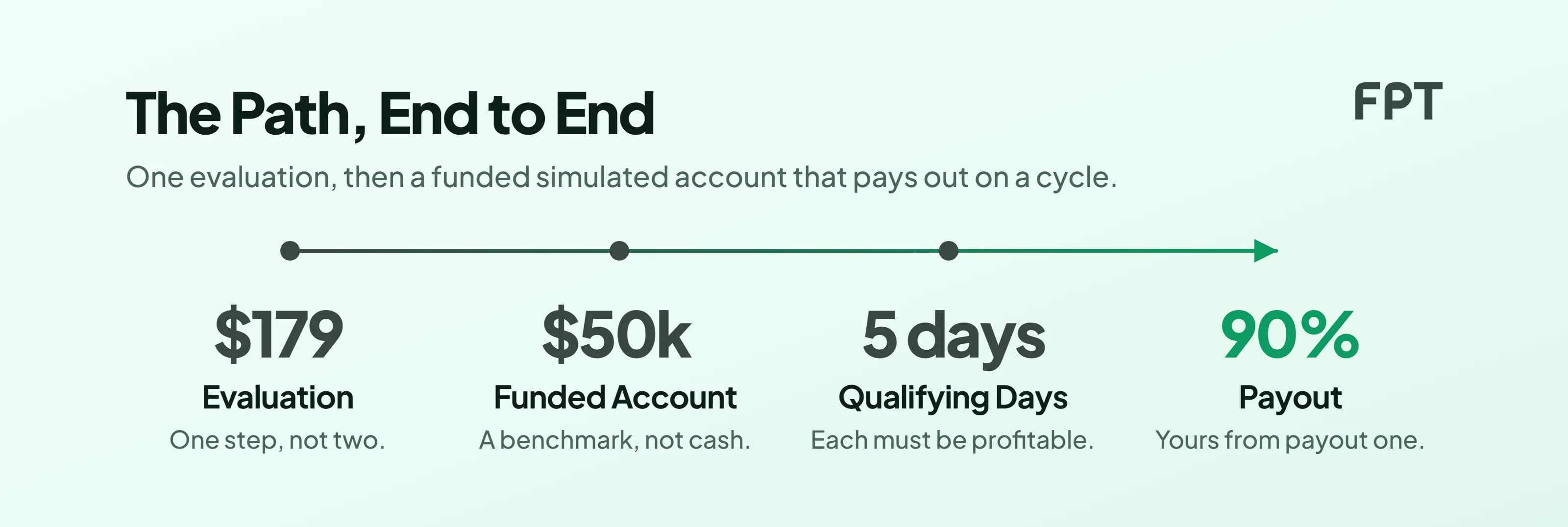
You are buying the evaluation. FPT Scale runs it in one step, not two, and the funded account only exists if you pass.
What a Run Costs You
You pay the evaluation fee and nothing else. A second run on the $50k costs a $99 reset — $69 on the $25k, $159 on the $100k, and less again on the monthly plan. There is no trading deposit, no margin call and nothing to top up. After that you spend time.
One trader may hold five active accounts, evaluation and funded combined. What five accounts do and do not add up to is taken apart separately.
Whose Account Is It?
FPT Scale accounts are simulated trading accounts. The payouts are real money and the rules are real constraints. The position is not held on the venue in your name.
Account Size Is a Yardstick, Not Cash
This is the most important line on the page. Account size is not cash paid to you and not capital you deploy. Your target, max loss and drawdown are measured against it. In the $50k evaluation, $2,000 is the most you may hold open across all positions at once. Stay within the published loss limit to keep the evaluation active.
Who Is on the Other Side
the counterparty to each trade is another Polymarket user
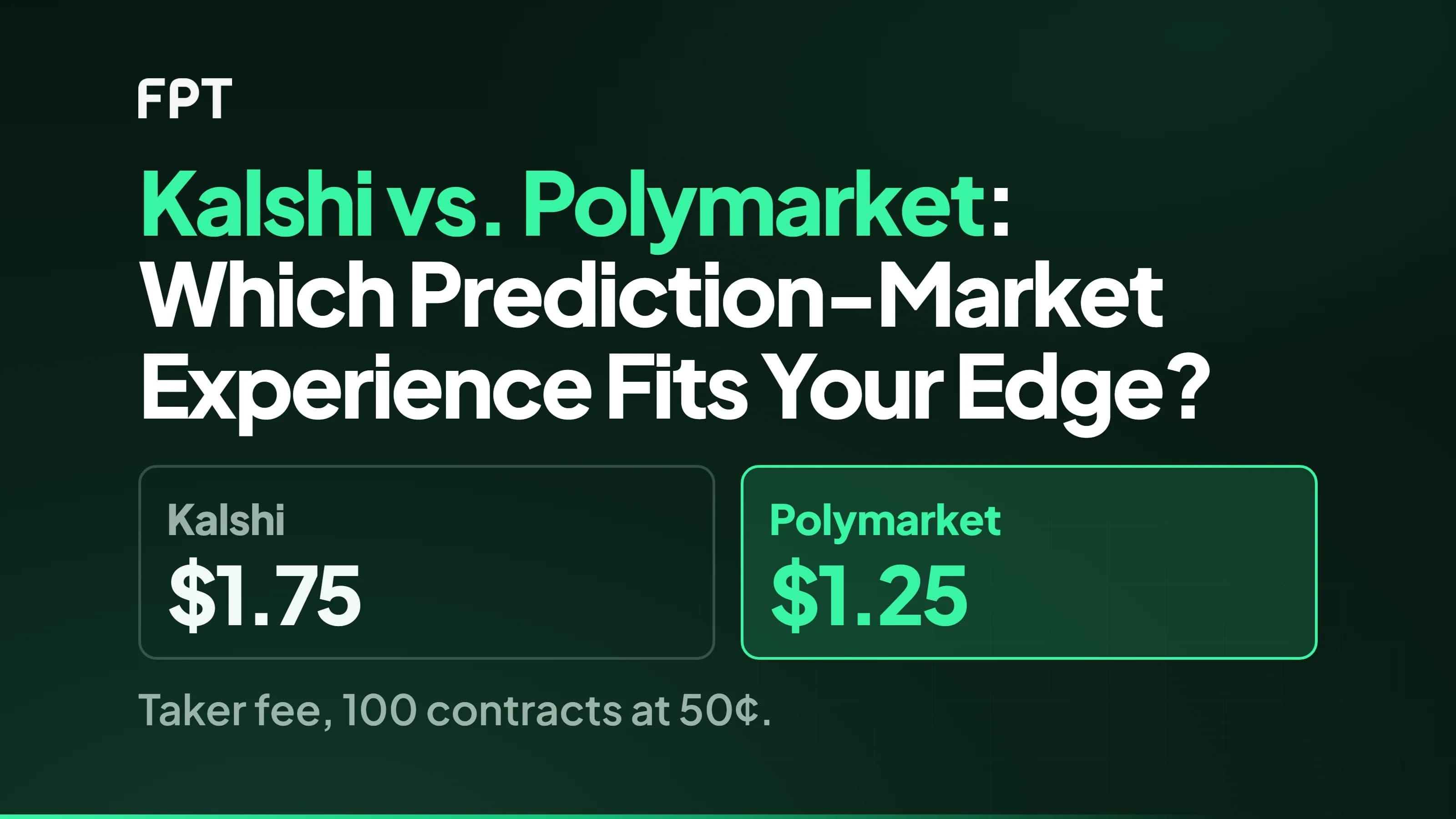
Under the prop layer, that is who you trade against: other people on an order book. Kalshi is a CFTC-designated contract market, and so is Polymarket's US entity.
FPT checks orders against the live price and liquidity rather than filling you stale, and is not affiliated with either venue. Both are included; here is how they differ.
The Rules That Decide Everything
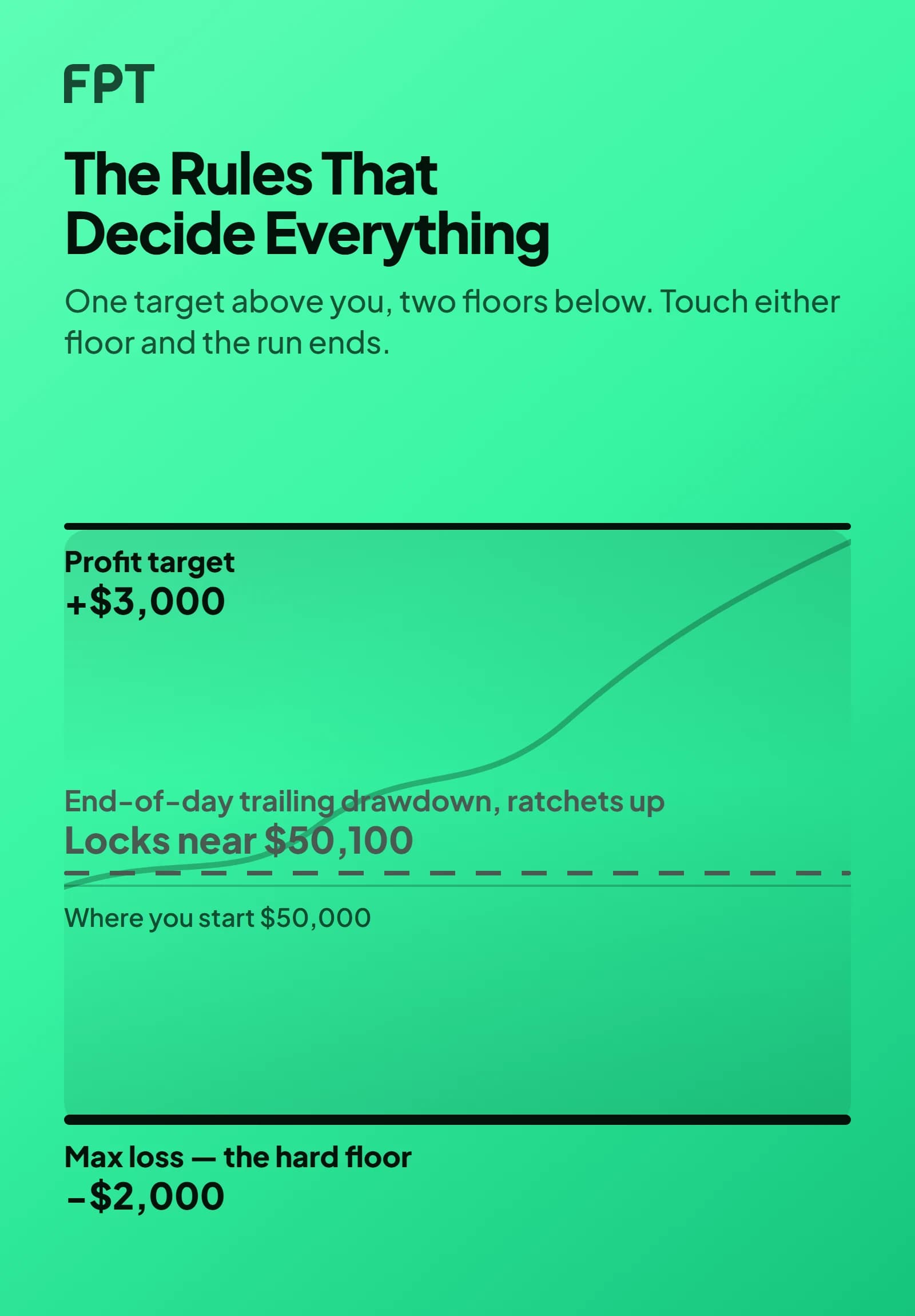
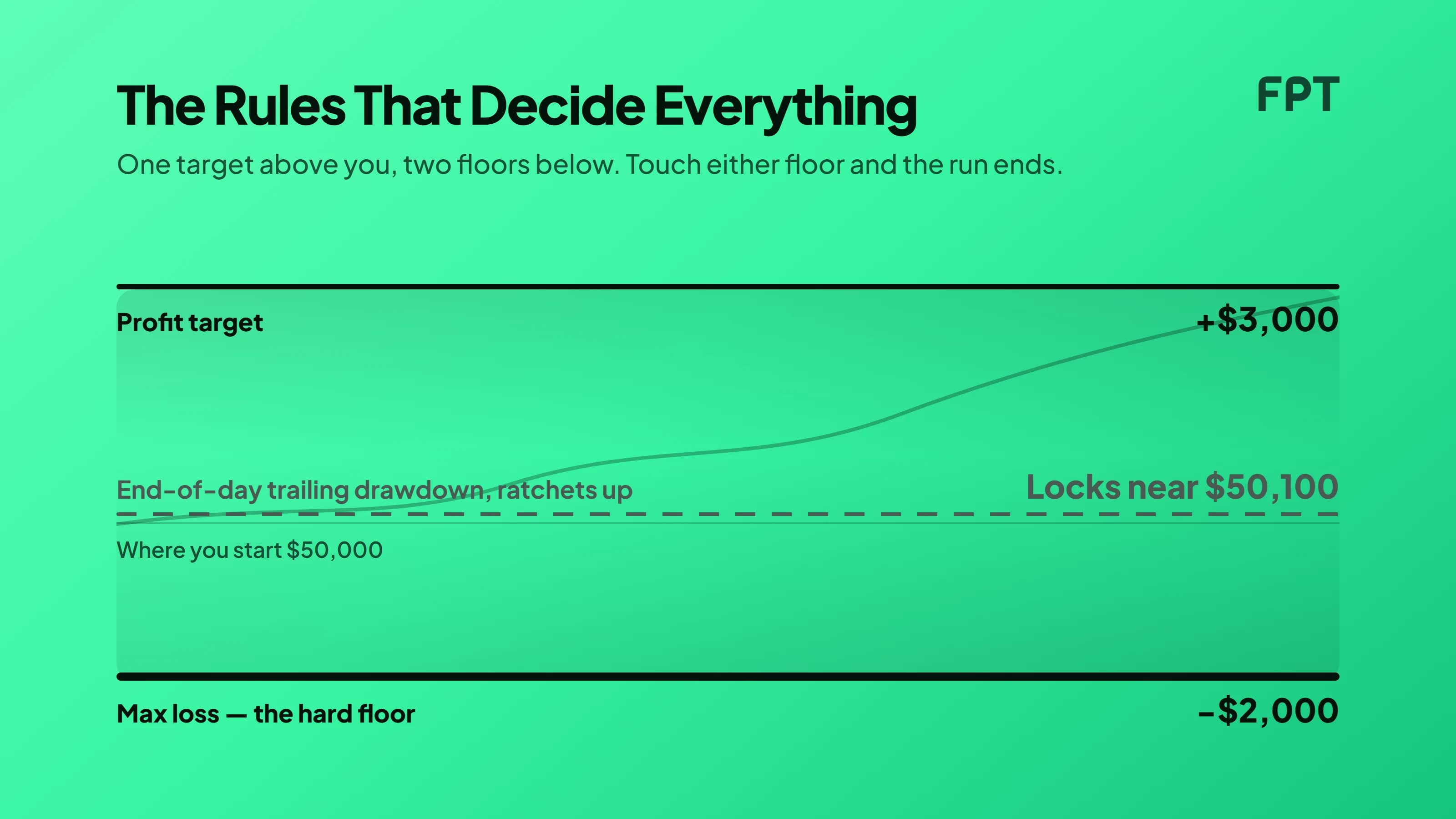
Three numbers scale with account size. Every other rule in the evaluation is identical at every size.
Profit target
- $25k
- $1,250
- $50k
- $3,000
- $100k
- $6,000
Max loss
- $25k
- $1,000
- $50k
- $2,000
- $100k
- $3,000
Max open size
- $25k
- $1,000
- $50k
- $2,000
- $100k
- $3,000
Profitable day minimum
- $25k
- $100
- $50k
- $150
- $100k
- $200
| Rule | $25k | $50k | $100k |
|---|---|---|---|
| Profit target | $1,250 | $3,000 | $6,000 |
| Max loss | $1,000 | $2,000 | $3,000 |
| Max open size | $1,000 | $2,000 | $3,000 |
| Profitable day minimum | $100 | $150 | $200 |
Max open size is the most you may hold open across all positions at once, not a separate limit for each one. A profitable day counts toward the five you need only if it clears the minimum for your size. Identical at all three sizes: no separate daily loss limit, end-of-day trailing drawdown that locks near the starting balance, and a 40% consistency rule. Evaluation figures only, from the published FPT Scale offer spec, July 26, 2026.
No Daily Loss Limit Is Not No Limit
No separate daily loss limit is the line people screenshot. Read it whole: no fixed daily amount stops you out, but a max-loss rule and an end-of-day trailing drawdown still apply, and both are enforced against your live equity rather than only at the close. What ends the account is touching one of those two floors, at any moment of the day.
How the Trailing Drawdown Ratchets Up
The floor starts below your balance, ratchets up as you profit, and never falls back. It moves only when you close a day higher, so a spike you give back raises nothing permanently — but it is tested continuously, so an intraday dip through it ends the account. On the $50k it locks near $50,100.
The Consistency Rule, and Why Five Days Beat One
No single day may account for more than 40% of total profit, in the evaluation and again in every funded payout cycle. Suppose you reach $3,000 of profit and your best day made $1,500. That day is half the total, and half is over the line — which defers passing rather than failing the account. Keep trading and further profitable days bring the ratio down. One enormous night does not get you funded. Five ordinary ones do.
Why Position Size Works Differently Here
Every rule so far has a counterpart in the futures world. This one does not.
Limits are set in dollars, not contract counts, and your max open size covers everything you hold at once rather than each position on its own. Then a second limit lands on top, one futures never needed: any one market is capped at 5% of its 24-hour volume. What a market will let you open is the lower of the two — whatever is left of your max open size, or that market's 5% ceiling. Go over either and the order is blocked before it goes through, which is a guardrail rather than a breach.
For example, take one account into two markets on the same afternoon and watch which cap bites.
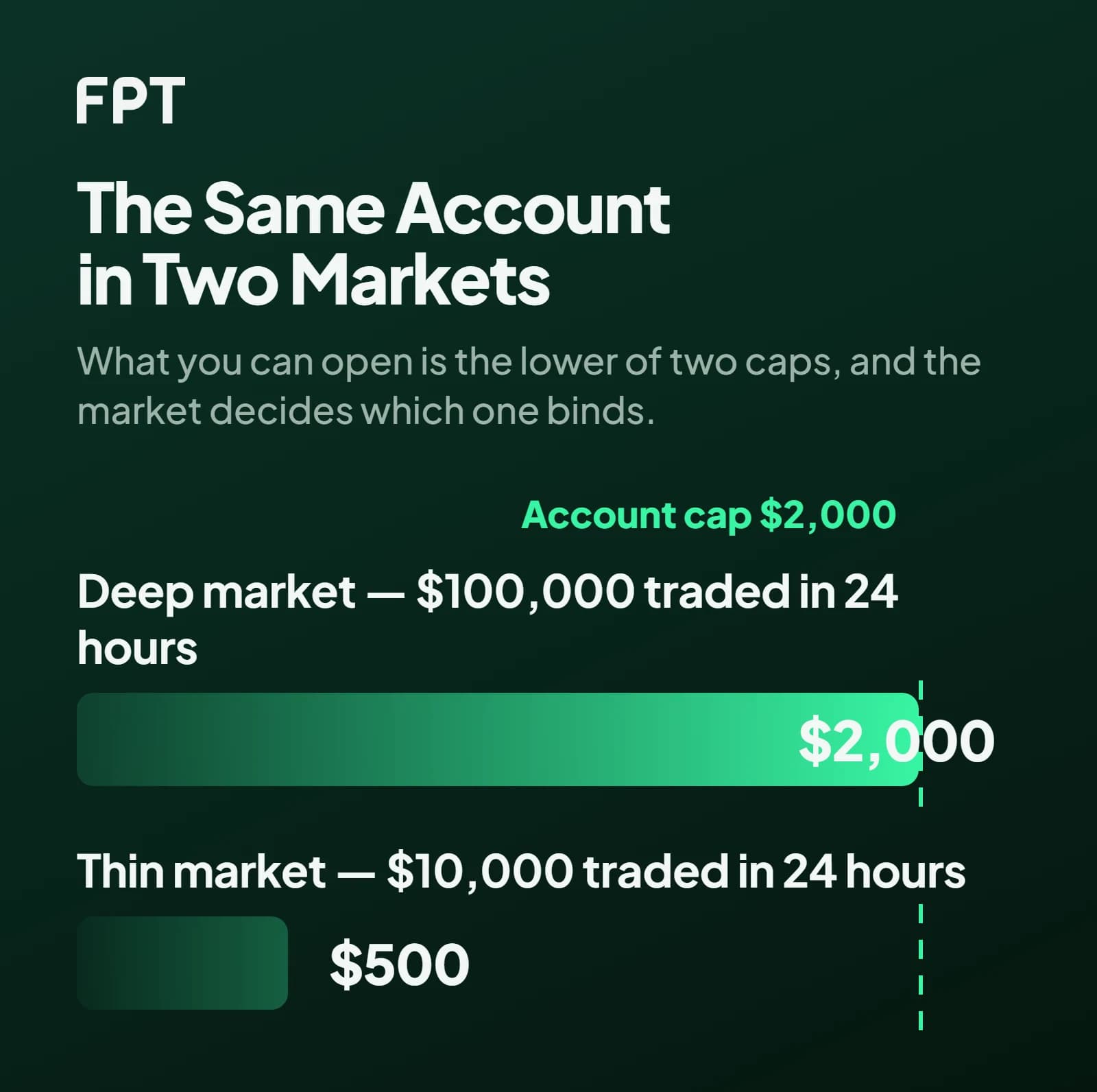
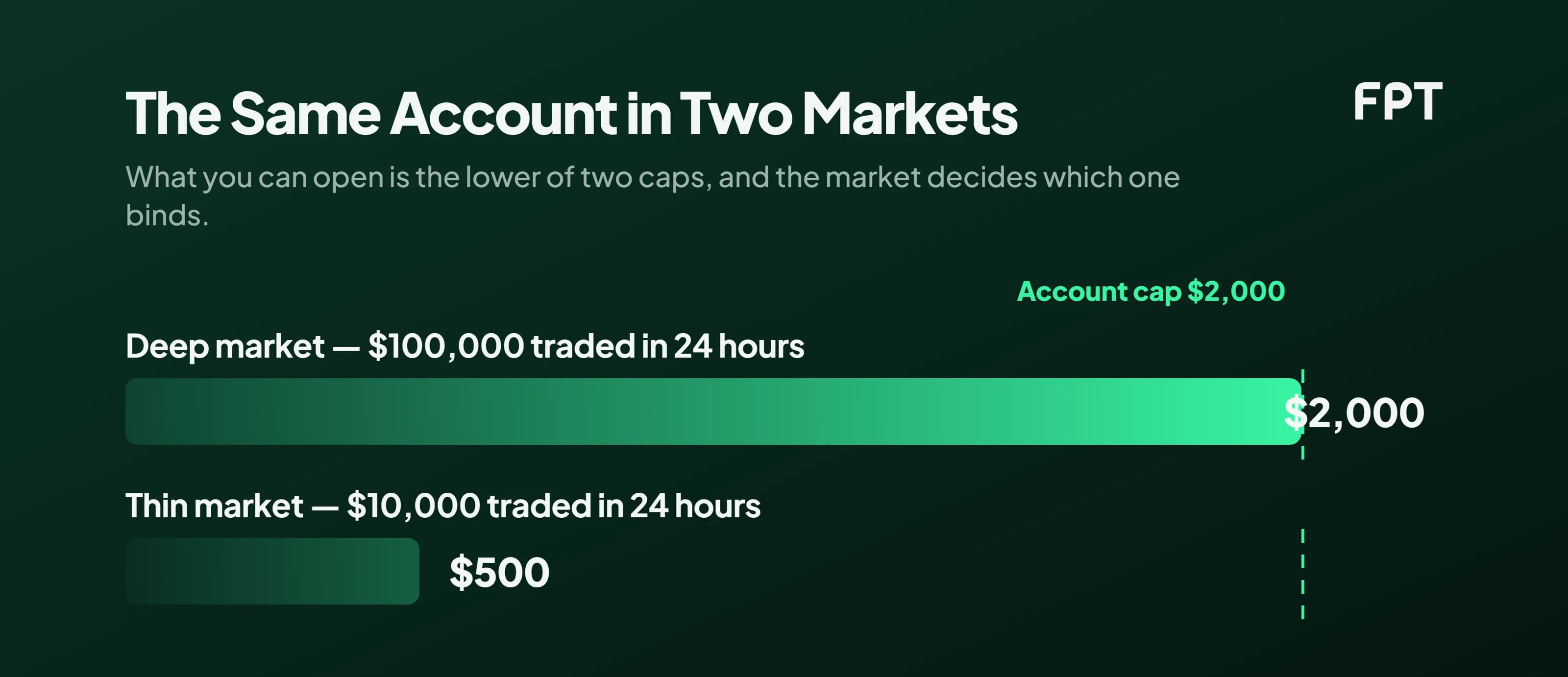
Why that rule? Depth on these venues is thinner than headline volume suggests.
What the Census Found
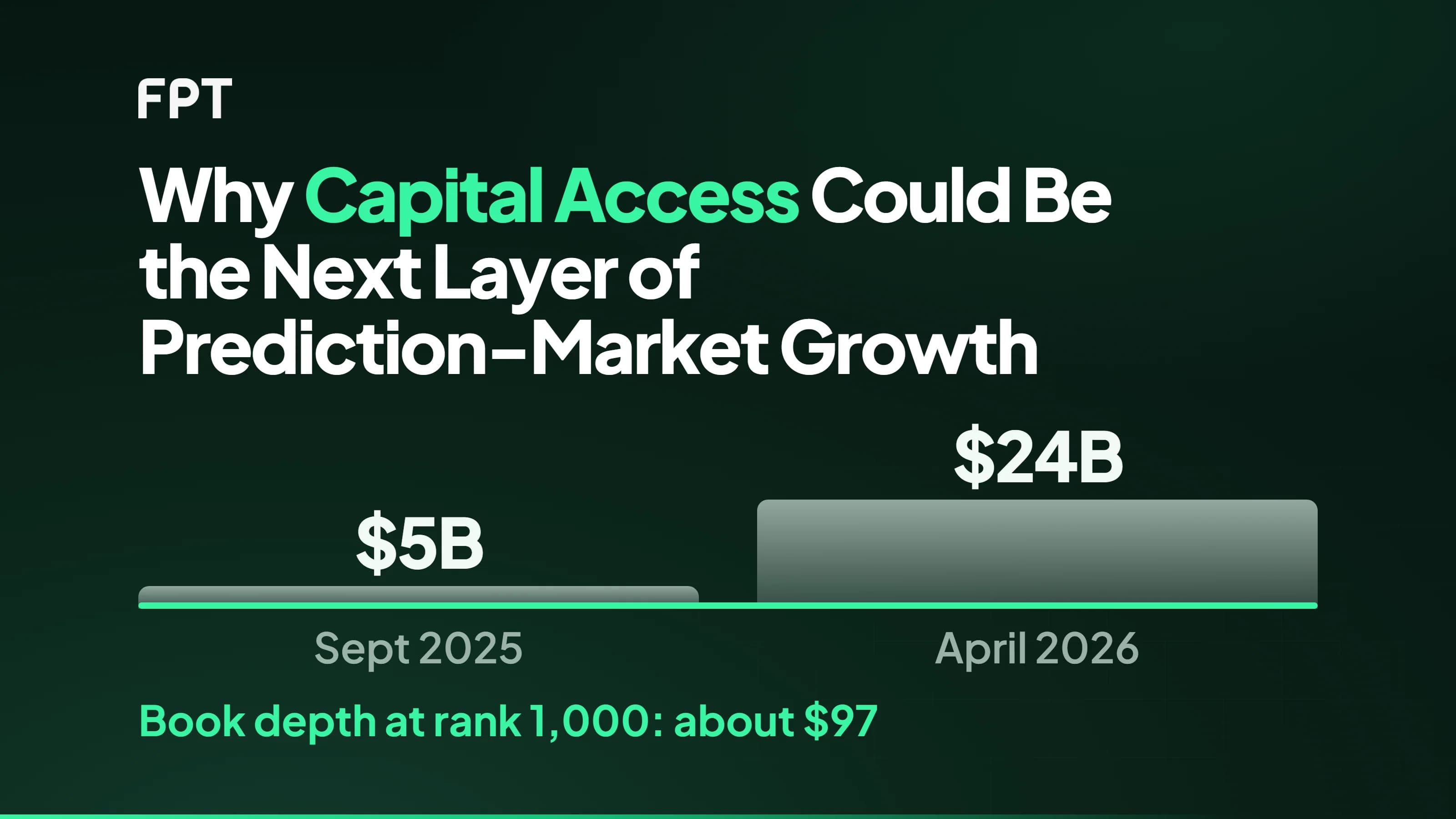
Those come from a full census of both venues' public APIs on July 26, 2026; a weekday would differ. Volume is genuinely large — Pew Research Center put combined monthly trading near $24 billion in April 2026 — and over half of any day's trading still sits in roughly a hundred markets.
Why Traders Use the Model
The split is 90/10 in your favour from the first payout. What you get is size you did not have to fund, on published rules, with your cost capped at the fee. The same model against a futures prop firm runs that row by row. How much it is worth to you turns on one question.
Is Capital Your Constraint?
Capital is your constraint
The model gives you more room
- If your own bankroll supports a $400 position…
- Funded size on the $50k reaches $2,500 up the ladder, for a fee and a rule set.
Capital is not the problem
Your own capital may already be enough
- You already size positions larger than this ceiling.
- The ceiling here sits below the one you have.
Getting Paid, and How the Ladder Climbs
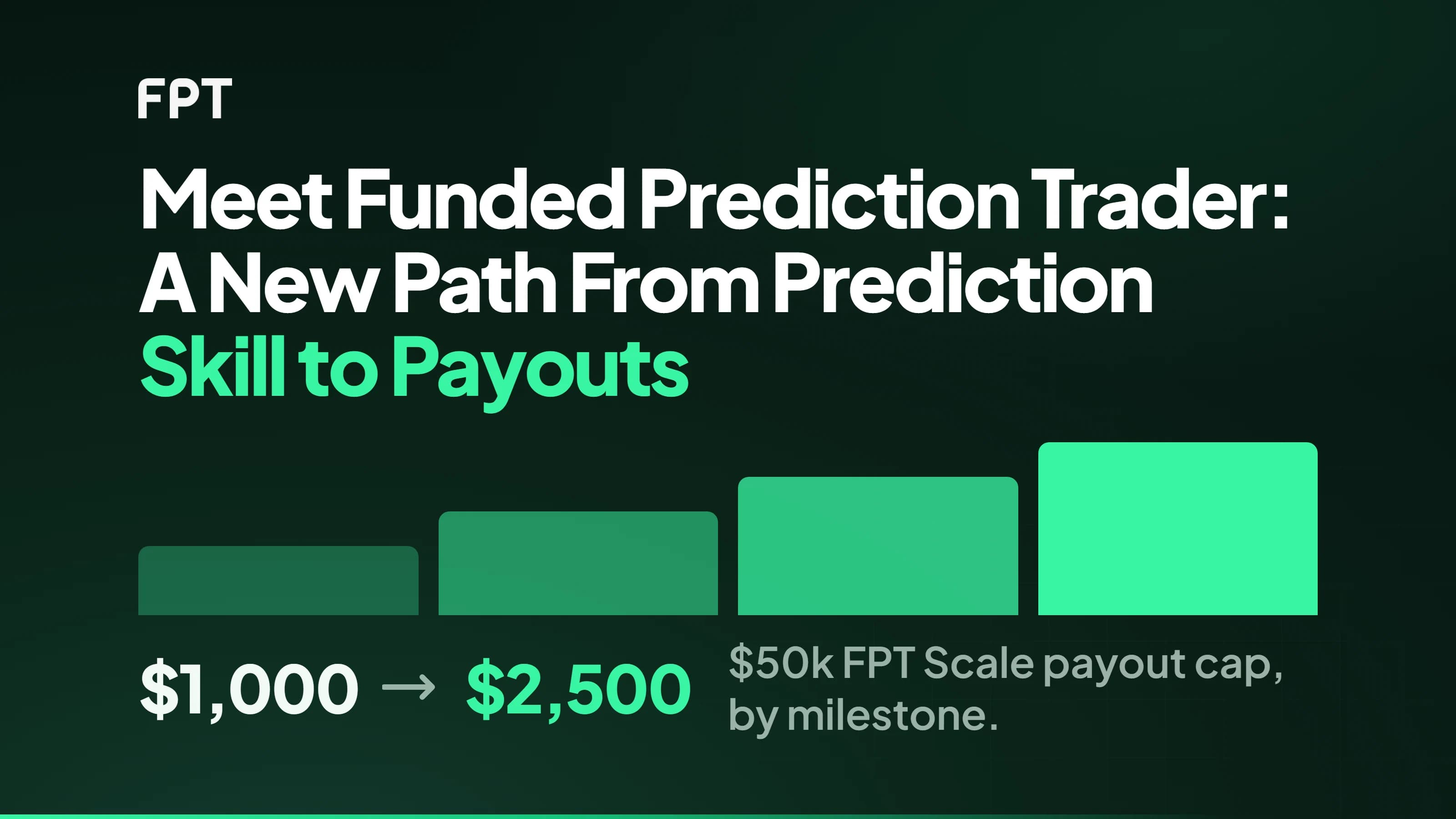
A payout cycle is five qualifying days, not a calendar month. A qualifying day has to clear a small profit floor that rises with account size — $150 on the $50k. Consistency applies inside the cycle too, and 90% of the profit is yours.
The $50k Funded Ladder
- Funded start$1,000
- First payout$1,500
- Second payout$2,000
- Third payoutThe ceiling$2,500
Approved payouts raise your cap and your size through the fourth tier, where both reach their maximum. The ladder is finite by design, and it is published so you can see where it ends.
Approved payouts are sent within 48 hours of approval — that covers payment once a payout is approved, rather than the review itself. An evaluation can be restarted for a reset fee; funded accounts progress through approved payouts rather than a reset.
Who Gets the Most From the Model
FPT Scale works best for a strategy that can produce repeatable profitable days in markets with enough liquidity to size into. Two shapes sit further from that centre, and both are a matter of structure rather than discipline.
Four questions worth answering first
- Does your year hang on four elections and a title fight? Consistency rules that out.
- Does your edge live in markets that barely trade? The volume cap binds there first.
- Do you already fund positions larger than this ceiling? Then your own capital may serve you better.
- Is the venue you want reachable where you live? Access depends on location.
An Event-Lumpy Strategy
An edge that resolves in one night cannot produce five profitable days, and that night on its own puts you over the 40% line — which defers passing until more profitable days bring the ratio down. This model pays for a modest edge found often, not for a trader who is spectacular once a quarter.
An Edge That Only Exists in Thin Books
Long-tail markets are where mispricing survives longest, which is exactly why serious traders live there. Thin markets reach the volume limit soonest, because the book cannot absorb the size anyway. Say you find a clean mispricing in a market almost nobody trades — the rule sets your size long before your conviction does.
If neither describes you, the rest are parameter questions: which size, which venue, and how much of your process you want running inside a published rule set. The evaluation rules answer most of them, and the account builder puts the three sizes side by side — target, loss limit and max open size against each other. Start there and pick the one that fits how you already trade.
Sources & Method
Product figures are taken from FPT's approved FPT Scale offer spec and its typed offer config, not retyped from marketing copy. Venue and category claims are sourced to first-party documentation and CFTC records. The liquidity figures come from a complete census of both venues' public market APIs run by the FPT editorial desk on July 26, 2026.
- What is Polymarket? — Polymarket. Accessed Jul 26, 2026.
- How is Kalshi regulated? — Kalshi. Accessed Jul 26, 2026.
- Understanding Prediction Markets and Event Contracts — Commodity Futures Trading Commission. Accessed Jul 26, 2026.
- Trading Organizations — Industry Filings — Commodity Futures Trading Commission. Accessed Jul 26, 2026.
- Trading Objectives — FTMO. Accessed Jul 26, 2026.
- Gamma Markets API — keyset market census — Polymarket. Accessed Jul 26, 2026.
- Kalshi Trade API — open markets census — Kalshi. Accessed Jul 26, 2026.
- Polymarket CLOB API — order book endpoint — Polymarket. Accessed Jul 26, 2026.
- Trading volume on prediction markets has soared in recent months — Pew Research Center, May 27, 2026. Accessed Jul 26, 2026.
Common Questions
Is a prediction-market prop firm the same thing as a sportsbook?
No, and the difference is mechanical rather than moral. Polymarket's own documentation states that the counterparty to each trade is another user rather than the venue, and the CFTC oversees event-contract exchanges as designated contract markets. A prop firm sits a layer above that: it sells an evaluation and a rule set, and it is not the counterparty to your position either.
Do you trade real money in an FPT Scale account?
FPT Scale accounts are simulated trading accounts. The payouts are real money and the rules are real constraints, but the account size is a benchmark that the profit target, max loss and drawdown are measured against, not cash transferred to you and not capital you deploy.
What does a 40% consistency rule mean in practice?
No single day may account for more than 40% of your total profit, and the rule applies in the evaluation and again in every funded payout cycle. On the $50k FPT Scale account, passing with $3,000 of profit and a $1,500 best day puts that day at 50% of the total, which is over the line. Going over does not fail the account: it defers passing until further profitable days bring the ratio down.
How quickly are payouts paid?
Approved payouts are sent within 48 hours of approval. A payout cycle needs five qualifying days with your largest day at 40% or less of the cycle's net profit, and the amount is limited by your account's payout cap. 90% of the profit is yours.
How many accounts can one trader hold?
Five active accounts per user, evaluation and funded combined, with no bypass through duplicate emails or related profiles. That cap is where the combined-account-size ceiling quoted across the site comes from.
Referenced on this site